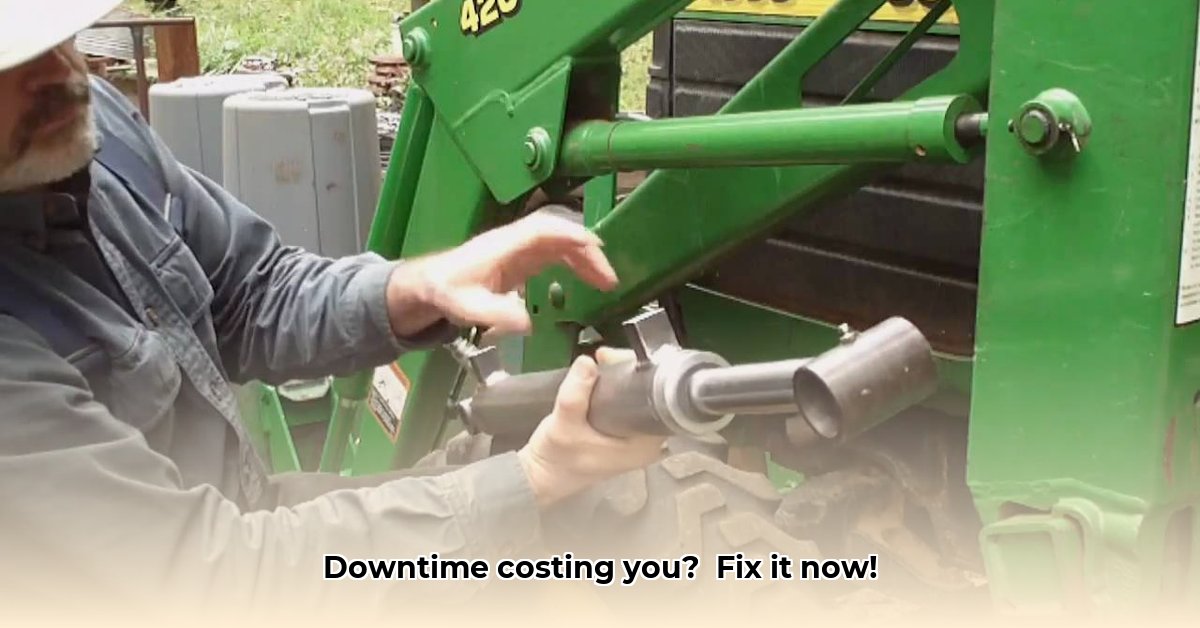
Understanding Loader Cylinder Specifications: The Key to a Perfect Fit
Downtime on your farm is costly. A faulty tractor loader cylinder can grind operations to a halt, impacting your schedule and bottom line. Choosing and installing the correct replacement is crucial for maintaining productivity. This guide provides a step-by-step approach to ensure a seamless replacement process. Knowing how to correctly identify and specify replacement cylinders saves time and money in the long run. What are the critical specifications to consider? For more detailed information on tractor hydraulics, check out this helpful resource: Tractor Hydraulics.
Bore Size (Internal Diameter): This determines the cylinder's lifting capacity. A larger bore equates to greater lifting power. Precise measurement of your old cylinder's internal diameter is essential. A small discrepancy can lead to significant problems.
Stroke Length (Piston Travel): This dictates the lift height. Measure from the fully retracted to the fully extended position on your existing cylinder. A longer stroke means a higher lift.
Mounting Style: The way the cylinder attaches to your tractor varies. Capture detailed images from multiple angles for accurate matching of the replacement part.
Port Configuration (Hydraulic Connections): These are the hydraulic hose connection points. Mismatched ports result in leaks or system failure. Verify these carefully!
Rod Diameter: This influences the cylinder's weight-bearing capacity. Choose a replacement with an identical rod diameter.
Incorrect specifications lead to poor performance or damage to the hydraulic system. Take your time and prioritize accuracy. Isn't maximizing uptime a worthwhile investment?
Choosing the Right Replacement Cylinder: A Precise Approach
Replacing a loader cylinder is simpler than it seems, but precision is paramount. Here's a systematic approach:
Identify Your Tractor's Make and Model: This information, usually found on a sticker on your tractor, helps narrow down your search. This is crucial for ensuring compatibility.
Meticulous Measurement: Accurately measure the bore size, stroke length, and rod diameter of your old cylinder. Document everything; detailed photographs are highly recommended. What steps can ensure accuracy?
Partner with a Reputable Supplier: Research and compare suppliers. Read reviews and ask questions. A reputable supplier offers technical support and ensures quality parts.
Confirm Compatibility: Before purchasing, verify the supplier's cylinder specifications match your tractor. Contact the supplier if you have doubts; it's better to be safe than sorry. What measures can be taken to prevent compatibility errors?
Choosing the correct cylinder prevents costly repairs and downtime. Thoroughness saves time and prevents future headaches.
Installation: A Step-by-Step Guide to Safe Replacement
Replacing a loader cylinder is straightforward, but safety remains paramount. Always consult your tractor’s repair manual for detailed instructions.
Safety Precautions: Disconnect hydraulic lines and relieve system pressure. This step is critical to prevent injury and equipment damage. Your tractor's manual outlines the proper procedure. What safety measures are particularly crucial?
Removing the Old Cylinder: Carefully detach the old cylinder, noting hose routing, bracket positions, and other relevant details. Multiple photographs are invaluable.
Installing the New Cylinder: Mount the new cylinder, ensuring precise alignment and matching bracket positions.
Reconnecting Hydraulic Lines: Securely reconnect hydraulic lines; carefully check for leaks. A leak here can cause significant problems.
Bleeding the System: Remove any trapped air to ensure smooth operation. Refer to your tractor's manual for the specific bleed procedure.
System Test: Operate the loader to verify functionality after installation. This final check is crucial for safety. What steps will help to ensure a smooth test?
Maintenance and Troubleshooting: Prolonging Lifespan and Addressing Issues
Regular maintenance extends the life of your loader cylinder significantly.
Regular Inspections: Inspect for leaks, dents, or unusual wear. Address any problems immediately to prevent further damage.
Cleanliness: Keep the cylinder clean and free of debris.
Lubrication: Use the correct hydraulic fluid specified in your tractor's manual.
Avoid Overloading: Adhere to the cylinder's rated capacity. Overloading can quickly cause irreparable damage.
Common Issues and Solutions
Even with proper installation, problems can arise.
| Problem | Possible Causes | Troubleshooting Steps |
|---|---|---|
| Slow Lifting/Lowering | Low hydraulic fluid, leaks, air in the system, worn seals | Check fluid levels, inspect for leaks, bleed the system, replace seals |
| Cylinder Doesn't Move | Electrical malfunction, hydraulic pump failure | Inspect electrical components, fuses, and the hydraulic pump |
| Leaks | Damaged seals, loose fittings, worn cylinder rod | Replace seals, tighten fittings, check cylinder rod for damage |
Ignoring these problems can lead to extensive damage and costly repairs. What preventative steps can you adopt?
Regulatory Compliance: Adherence to Safety Standards
Ensure your replacement cylinder meets all applicable safety and environmental regulations. These regulations vary by region, so check with local authorities for compliance. What are the potential penalties for non-compliance?
Conclusion: Maximize Uptime and Minimize Downtime
Replacing a tractor loader cylinder requires attention to detail, but these steps streamline the process. For complex issues, always consult a qualified mechanic to maintain efficiency and safety. Remember, properly maintained equipment significantly extends its lifespan, ensuring you maximize productivity with minimal downtime.